
Faucets
Most drips come from a worn cartridge, washer or O-ring, and the fix depends on the faucet's design. Leaks at the base or under the counter usually involve the supply connections or a sprayer hose.
A faucet that drips through the night, a toilet that refills every few minutes, a damp cabinet under the bathroom sink, or a fixture you are ready to replace. Fixture work covers the hardware you use every day and the shutoffs, supply lines and drain connections hidden beneath it.
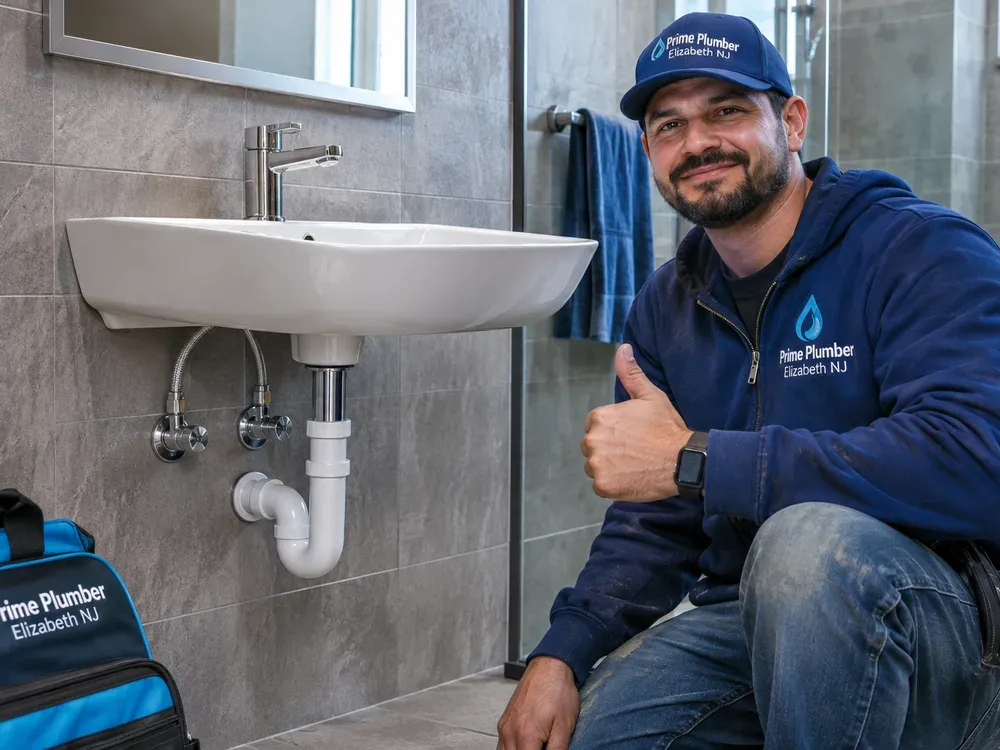
Find the fixture you are dealing with. Each one fails in a few predictable ways.
Most drips come from a worn cartridge, washer or O-ring, and the fix depends on the faucet's design. Leaks at the base or under the counter usually involve the supply connections or a sprayer hose.
Running, phantom refills and weak flushes trace to the flapper, fill valve or flush valve. Water at the base or a toilet that rocks points to the wax seal or the flange underneath.
Loose traps, failed drain basket seals and tired pop-up assemblies cause most under-sink moisture. Mounting problems, such as a sink pulling away from a wall or counter, are checked at the same time.
Angle stops that will not close, corroded compression nuts and aging rubber hoses are small parts with big consequences. Replacing them during fixture work is often the sensible move.
Describe what the fixture does and when. That is usually enough to plan the right parts for the visit.
A fixture with a sound body and available parts is usually worth repairing. A new cartridge or fill valve costs far less than a new faucet or toilet, and it keeps a fixture that already fits the space. Replacement makes more sense when the body is cracked or corroded, parts are discontinued, the fixture has been repaired repeatedly, or you are changing the look or function of the room. Parts for older faucets can sometimes be matched by bringing the worn cartridge or stem along; when they cannot, a replacement that suits the existing holes and connections is the practical route.
Either way, the work separates the fixture's own hardware from what connects it to the building: the shutoff, the supply line and the drain. A new faucet on a seized valve, or a new toilet on a broken flange, will not stay trouble-free for long.
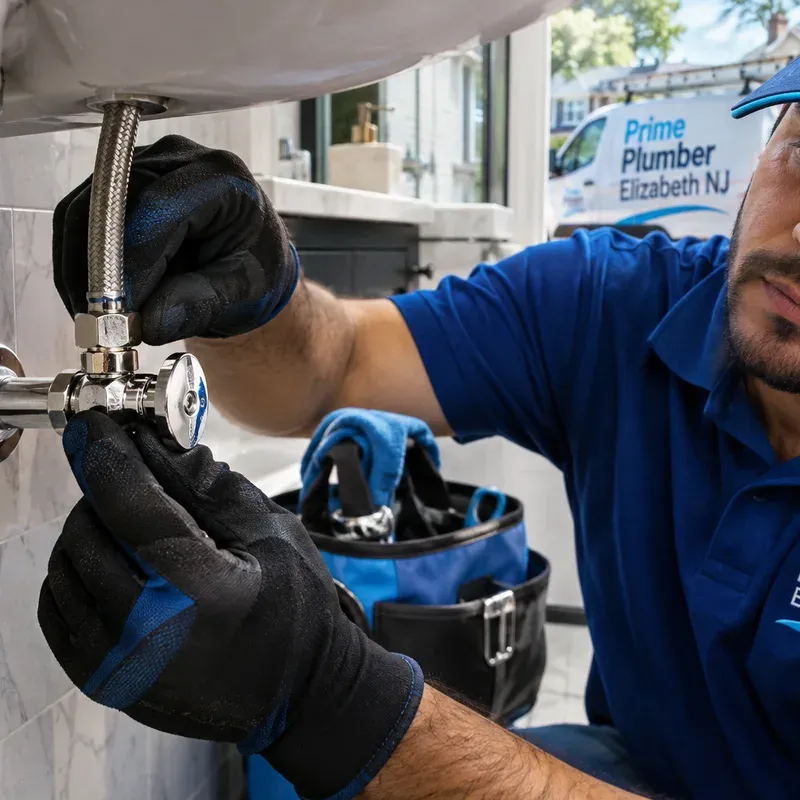
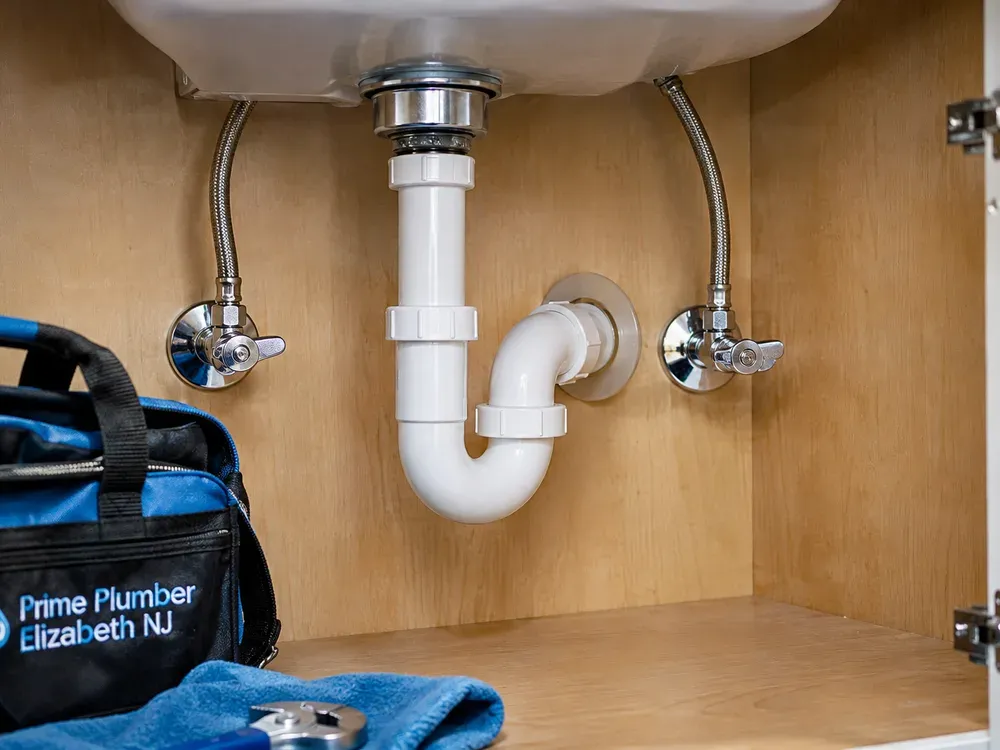
In older Elizabeth houses and apartments, the fixture is often newer than the valves and drain behind it. Toilet rough-in measurements, wall-mounted sinks and narrow bathroom layouts can limit which replacements fit, so measuring first saves a second trip.
In two-family homes and apartment buildings, a fixture without its own working shutoff can mean closing water to the entire building just to change a faucet. Adding or replacing stop valves during the job makes every future repair quicker and less disruptive for everyone in the building. Landlords managing several units often find it worth doing across all of them at once.
If water keeps appearing under a fixture after repair, or shows up somewhere else entirely, leak detection will trace it. For slow drains rather than leaks, see drain cleaning, and for the full list of services, visit the Prime Plumber Elizabeth NJ homepage.
In most cases, yes. A toilet that runs or refills on its own usually has a worn flapper, a fill valve that needs adjusting or replacing, or a chain or float set wrong. These parts are inexpensive and widely available. Replacement becomes the better choice when the bowl or tank is cracked, parts for an older model are hard to find, or the toilet rocks because the flange beneath it has failed.
Measure what is there now. For a toilet, that means the rough-in distance from the wall to the floor bolts. For a faucet, count the holes in the sink or counter and note their spacing. Check whether the shutoff valves under the fixture turn and look sound, since an old valve is best replaced at the same time. If you plan to buy the fixture yourself, ask beforehand whether customer-supplied fixtures can be installed.
The most common sources are a loose slip nut on the trap, a worn supply hose, a leaking angle stop, a faucet base or sprayer hose that drips when the tap is used, and a drain basket that has lost its seal. Dry the cabinet, run the faucet, then fill and drain the basin while watching with a flashlight. Where the first drop forms usually tells you which part is responsible.