
01
Frozen and split lines
Hard Union County freezes catch pipes in exterior walls, unheated garages, crawl spaces and near drafty sill plates. A frozen line often leaks only once it thaws, so check those areas after a cold snap.
A line that split during a freeze, a pinhole spraying inside a wall, fittings crusted with green corrosion, or a run of pipe that has leaked three times in two years. The question is how much of it needs attention, and that depends on the pipe around the failure as much as the failure itself.
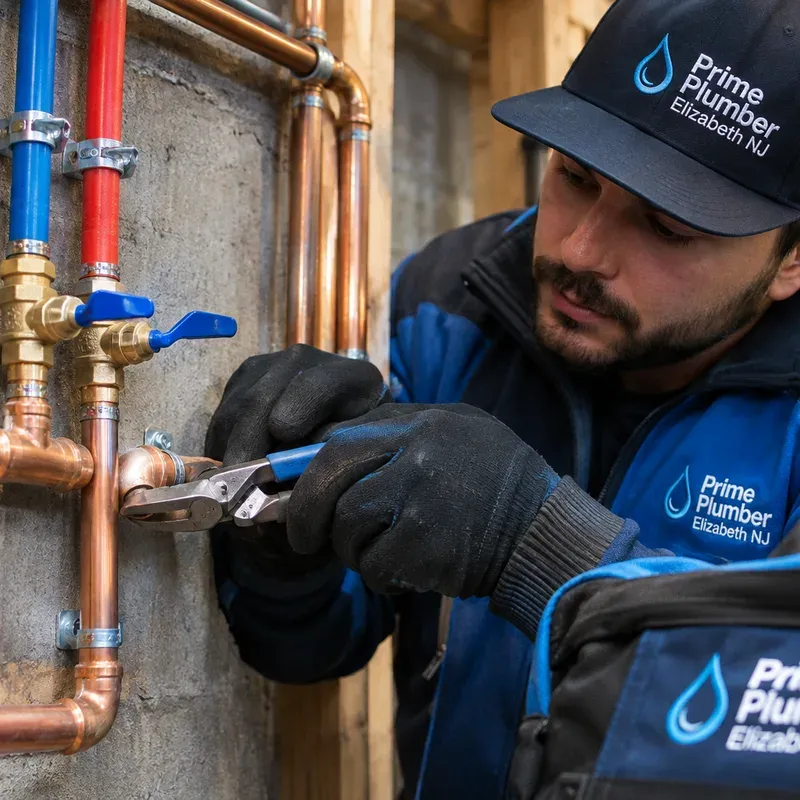
Most jobs sit on the first level. The findings, not the size of the leak, decide when to move up.
Localized
One failure point in pipe that is otherwise in good shape: a leaking joint, a single pinhole, a cracked fitting or a short frozen split.
Section
The failure is part of a pattern along one run. Corrosion, thinning walls or several repairs close together make replacing that length more reliable.
System
Failures keep appearing in different places, or aging pipe restricts flow across the building. Replacing a zone in planned stages limits disruption.
No repair plan should assume what is inside the walls. The first job is identifying the material actually installed, because copper, galvanized steel, CPVC and PEX each need their own fittings and methods, and joining them takes the right transitions. Connecting dissimilar metals directly can cause corrosion at the joint, which is a frequent reason a repair fails early.
The pipe on either side of the failure is checked for wall thinning, pitting, mineral buildup and old patch repairs. Sound pipe supports a short repair; tired pipe argues for going further.
Shutoff valves that close fully let the work be isolated without draining the whole building. Where valves are seized, replacing them can be part of the job. Finish openings are kept to what a sound joint needs, and restoring drywall or tile is scoped separately.
Every new joint is checked under normal water pressure before walls are closed or the job is finished.
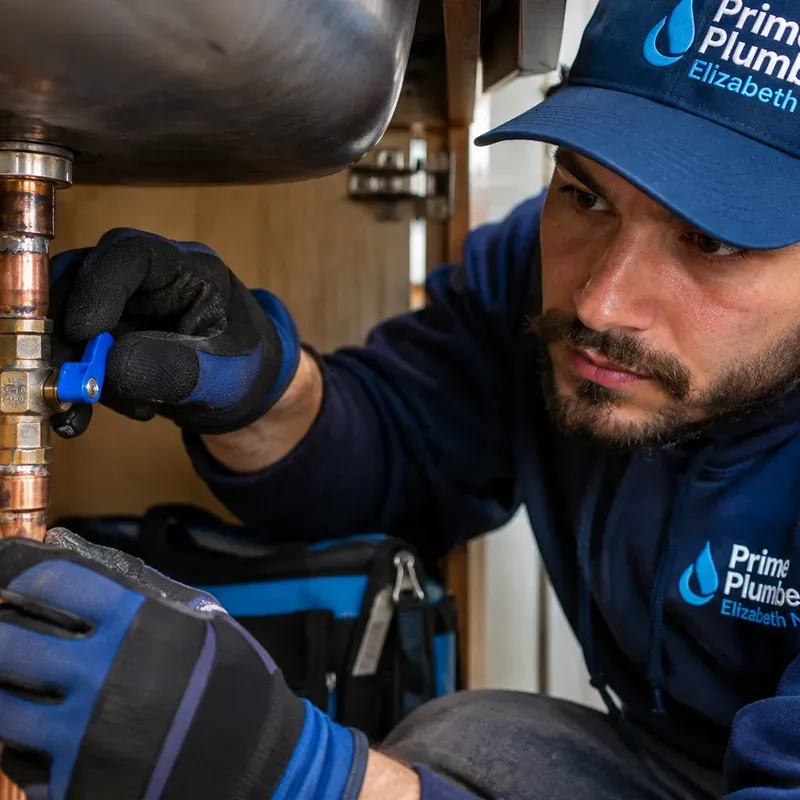
Shut the nearest valve or the main if it turns freely, collect the water you can and call.
Hard Union County freezes catch pipes in exterior walls, unheated garages, crawl spaces and near drafty sill plates. A frozen line often leaks only once it thaws, so check those areas after a cold snap.
Many Elizabeth homes have seen several rounds of updates, so newer piping is often tied into older runs. Those transition points deserve a careful look whenever a leak appears nearby.
Where older galvanized lines remain, internal buildup can steadily reduce flow. Low pressure across several fixtures may point to the piping itself rather than the faucets.
If you are still trying to work out where the water is coming from, leak detection is the right first step. Once the source is confirmed as a pipe, this page covers what happens next, and our Elizabeth plumbing overview explains how the services connect.
A few observations made safely from where you stand help decide the scope before anyone opens a wall. You do not need to touch the pipe or loosen anything to collect them.
Those details tell the plumber which materials and fittings to bring and whether the visit is likely to stay at a spot repair or needs time to assess a longer run.
Often, yes. If the failure is limited to a short length and the pipe on either side is sound, the damaged piece can be cut out and replaced with compatible material and fittings. The plumber checks the pipe beyond the failure first, because joining new material to pipe that is itself close to failing only moves the next leak a few inches along.
Where the pipe runs and what covers it. Exposed basement piping may need no opening at all. A line inside a finished wall, above a plaster ceiling or under tile needs an opening large enough to work safely and make a sound joint. The length being replaced, the number of fittings and nearby wiring or ductwork all affect the size of that opening.
When leaks keep appearing in different spots along the same run, when the pipe shows widespread corrosion or pitting, or when old galvanized lines are restricting water flow throughout the building. At that point, replacing a longer section or repiping a zone can cost less over time than a series of individual repairs and the water damage each one brings.