
01
No hot water anywhere
On gas units this can involve the ignition or a safety control; on electric units, a tripped limit, failed element or power issue. It affects every tap at once.
No hot water at all, showers that turn cold too soon, a tank that rumbles or a puddle at its base. Each points to a different part of the heater, and the findings decide whether a repair is sensible or whether it is time to plan a replacement.
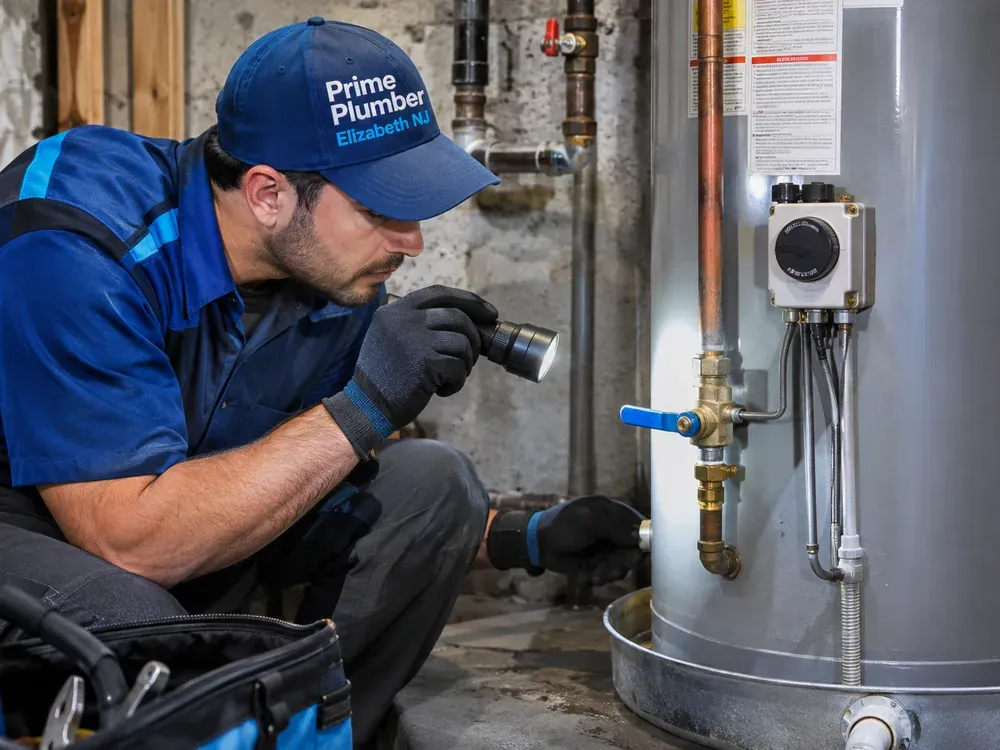
These are safe observations to make from outside the unit. Leave covers, gas controls and electrical parts closed.
On gas units this can involve the ignition or a safety control; on electric units, a tripped limit, failed element or power issue. It affects every tap at once.
Sediment buildup, a broken dip tube or one failed element of two can cut usable capacity. So can a household that has grown past what the tank was sized for.
Water that flips between hot and lukewarm can come from a thermostat or control fault, a mixing valve or a crossed connection elsewhere in the piping.
Sediment at the bottom of a tank traps water that boils in pockets. Flushing can help on younger units; on older ones it can signal the tank is near the end.
A drip from a fitting, valve or relief discharge pipe may be repairable. Water seeping from the tank body usually means the tank has failed.
Discolored hot water or a sulfur smell from hot taps only can relate to the tank lining or anode rod, and is worth checking before it worsens.
The answer depends on what failed, the condition of the tank and how old the unit is.
A replacement goes smoothly when the details are settled before the old unit comes out. Tank and tankless heaters, gas and electric models all have different requirements, and the options available depend on what the building can support. Size, access, venting, manufacturer installation instructions and permits are all part of the scope, and in New Jersey a water heater replacement generally needs a permit through the local construction office.
Gas connections, venting and electrical work stay with qualified professionals. A new unit is filled, checked for leaks at every connection and tested at the taps before the job is considered done.
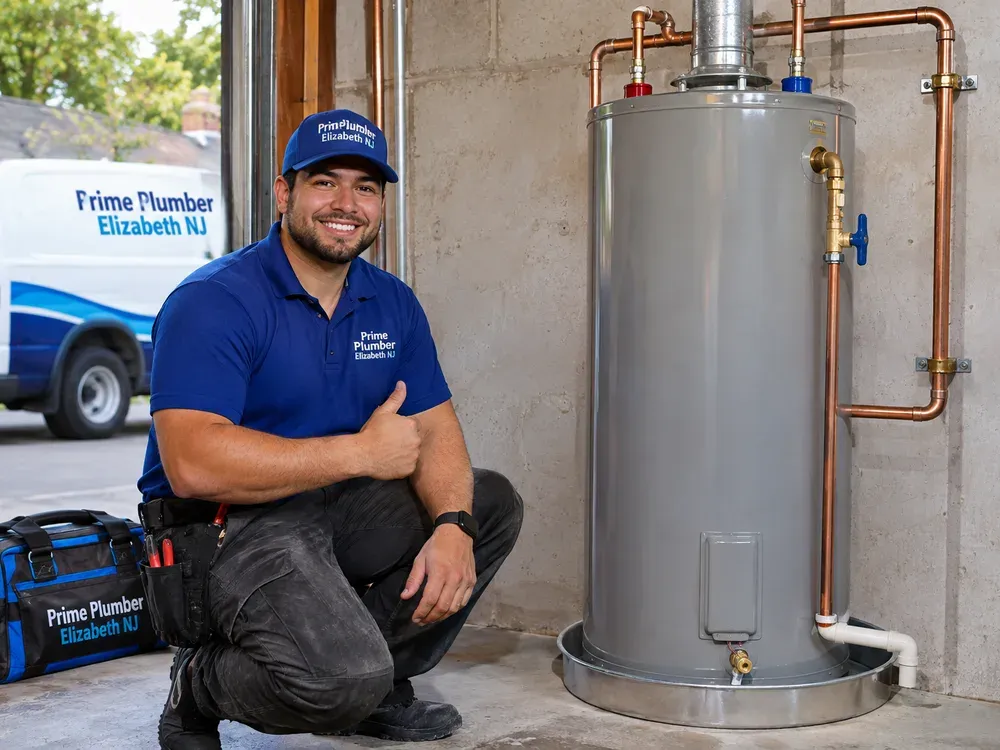
How many showers, baths and appliances run at once decides capacity or flow rate.
Basement stairs, utility closets and required clearances limit which units fit.
Existing gas supply, flue condition or power capacity shape the options.
Relief valve discharge, expansion control and permits are confirmed for the scope.
Most heaters in Elizabeth homes sit in a basement, a utility closet or a garage. In a two-family house, each unit may have its own heater sharing a flue or a small mechanical room, so tight access and older vent connections are common considerations. Winter matters too: incoming water is much colder from December through March, so a heater that barely kept up in summer can fall short once the weather turns.
If the heater is leaking, close the cold-water valve on top of the tank if it turns easily and keep the area clear. For a gas smell, leave the building and contact the gas utility before anything else. Water heater work is one part of plumbing help for Elizabeth properties; if the leak turns out to be in nearby piping instead, leak detection is the place to start.
In tank heaters, sediment from the water supply settles at the bottom and takes up space while insulating the water from the burner or lower element. A failed dip tube, a faulty element or thermostat on electric units, or simply more people using hot water than the tank was sized for can produce the same symptom. Checking the unit tells you which one you are dealing with.
The age of the heater, the condition of the tank, what failed and what the repair costs compared with a new unit. A control, element or valve can usually be replaced on a sound heater. Water seeping from the tank shell itself cannot be repaired, and repeated failures on an older unit often make replacement the better use of money.
How many people use hot water at the same time, the fuel available, the space and clearance around the current heater, and how it vents. Moving from a tank to a tankless unit, or changing fuel type, can involve gas piping, electrical or venting changes and possibly a permit. Ask what the replacement includes so the comparison between options is fair.